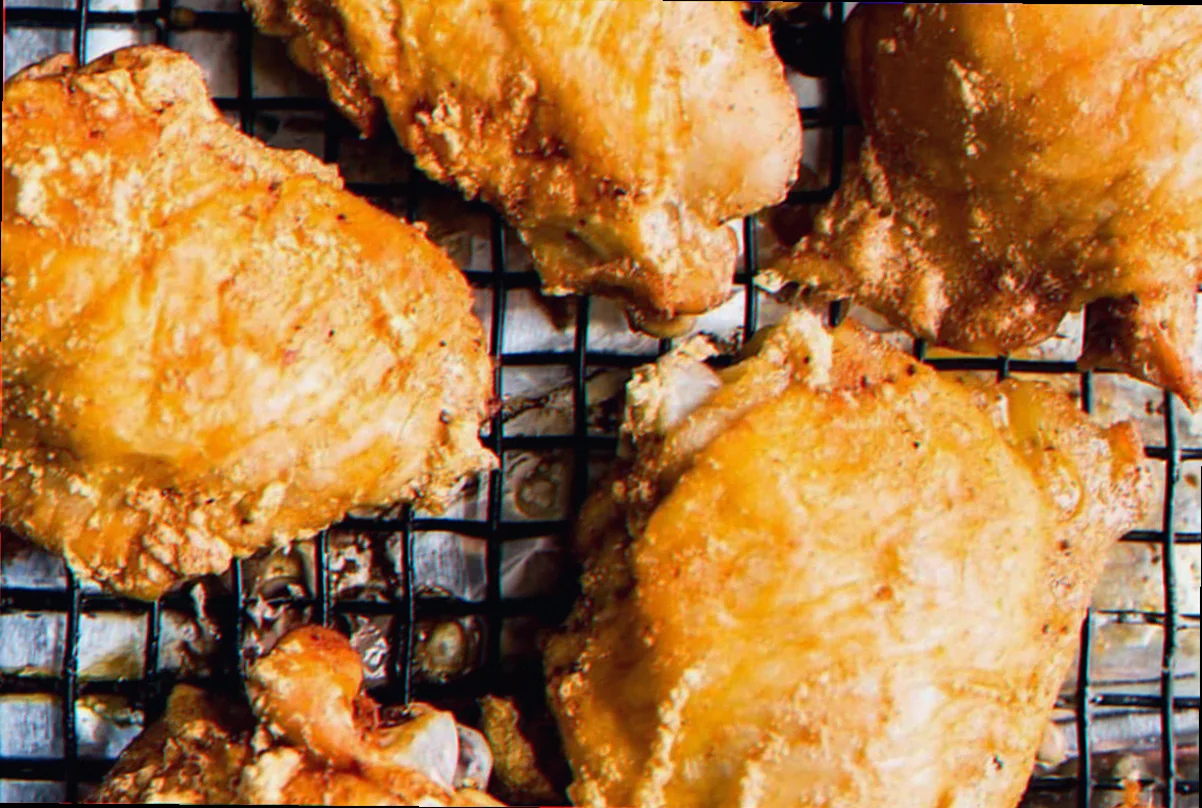
Whether you are prepping a platter for a State of Origin watch party in Brisbane or trying to beat the "hangry" school-run rush in suburban Melbourne, the humble chicken tender is an Australian freezer and fridge staple. While many of us rely on the "golden brown" visual cue, getting the timing wrong can turn a premium piece of Australian poultry into a dry, chewy "chook brick" or, worse, a food safety hazard. In a country that consumes more chicken per capita than almost any other nation, mastering the 4-to-6-minute window of the perfect fry is a national culinary necessity.
The Basics: What Every Australian Should Know About How long does chicken tenders take to fry
| What | The Australian reality |
|---|---|
| Plain English definition | Frying the "tenderloin"-the small, succulent strip of meat attached to the underside of the chicken breast. |
| Who it affects most | Busy Australian parents, pub chefs, and the 80% of households that serve chicken at least twice a week. |
| The most surprising fact | The "float" myth: Many Australians believe tenders are done when they float to the surface, but density and batter thickness make this an unreliable safety test. |
| The number you need to know | 75° Celsius-the internal temperature required by Food Standards Australia New Zealand (FSANZ) to ensure poultry is safe. |
| The bottom line | Deep frying takes 4-6 minutes; shallow frying takes 3-4 minutes per side, depending on the thickness of the cut. |
The Australian Story Behind How long does chicken tenders take to fry
The Australian relationship with fried chicken has undergone a massive cultural shift over the last decade. For years, the "tender" was relegated to the kids' menu at the local RSL or served as a side thought at charcoal chicken shops like El Jannah or Red Rooster. However, around 2015, the "American-style" fried chicken wave hit cities like Sydney and Melbourne, led by pioneers like Belle's Hot Chicken and Butter. This movement elevated the tender from a frozen convenience item to a gourmet craft.
In Australia, we have a unique advantage: our poultry industry. The Australian Chicken Meat Federation (ACMF) notes that our birds are hormone-free and predominantly raised on local grains, which results in a different moisture content compared to international imports. This means that an Australian tender often cooks slightly faster because the meat is exceptionally fresh. The "Story of the Tender" in Australia is one of transition-from the greasy snack consumed at a highway roadhouse on the Pacific Highway to a buttermilk-brined, spice-rubbed delicacy served in trendy CBD laneways.
Real Australian Experiences
- Scenario 1: The Friday Night Footy Rush. A family in Western Sydney is trying to fry up a batch of tenders before the first whistle of the NRL. They use a standard Sunbeam deep fryer. Because they overload the basket (a common Aussie mistake), the oil temperature drops from 180°C to 150°C, doubling the cook time from 5 minutes to 10 and resulting in oily, soggy breading.
- Scenario 2: The "Pub Schnitty" Alternative. At a local hotel in Adelaide, a chef prepares "Tenderloin Platters" as a lighter alternative to the massive parmigiana. By using high-smoke-point Australian canola oil and keeping the tenders at a uniform thickness, he achieves a perfect 4-minute fry that keeps the lunch service moving during the 12:30 PM rush.
- Regional variation: In humid tropical environments like Cairns or Darwin, the flour used for dredging can absorb atmospheric moisture quickly. This "heavy" flour coating often requires an extra 60 seconds of frying time to achieve the same crunch that a cook in dry Perth would get in four minutes.
- Generational difference: Older Australians (the "Boomer" generation) often lean toward shallow-frying tenders in a pan with a bit of olive oil or butter, taking about 8 minutes total. Gen Z and Millennials have almost entirely pivoted to the "Air Fryer" revolution, which technically isn't frying but mimics the result in 12-15 minutes.
Myth-Busting: What Australians Get Wrong About How long does chicken tenders take to fry
Myth 1: If the juices run clear, it is definitely cooked. Truth: While "clear juices" is the old-school advice passed down by Australian grandmothers, it isn't foolproof. Factors like the age of the bird or whether the tender was previously frozen can affect juice colour. The only way to be certain in the Australian climate is a digital meat thermometer hitting 75°C.
Myth 2: You should use Extra Virgin Olive Oil for frying tenders. Truth: Despite Australia producing world-class olive oil (like Cobram Estate), the smoke point of Extra Virgin Olive Oil is often too low for the high-heat flash-frying required for tenders. Using it can lead to a bitter taste and burnt breading before the chicken is cooked through. Stick to Australian Macadamia oil or refined Canola for the best results.
Myth 3: The more oil, the longer it takes to cook. Truth: It is actually the opposite. A larger volume of oil maintains a stable temperature better than a small amount. If you use a deep pot with plenty of oil, the chicken fries consistently in 4 to 5 minutes. If you use a shallow centimetre of oil, the cold chicken drops the oil's temperature significantly, dragging the process out and making the meat dry.
Recent Changes and What They Mean for Australians
In the last 24 months, the "Cost of Living Crisis" has significantly impacted how Australians fry chicken. With the price of takeaway rising, there has been a 15% surge in sales of bulk poultry packs at supermarkets like Coles and Woolworths. This has led to a "home-chef" boom where Australians are experimenting with double-dredging and brining techniques at home.
Furthermore, new health guidelines from various State Health Departments have encouraged Australians to look at the types of fats used in frying. We are seeing a shift away from imported vegetable blends toward locally produced, heart-healthy monounsaturated oils. For the average home cook, this means adjusting cook times slightly, as different oils conduct heat with varying efficiency.
The Indigenous Australian Dimension
The modern Australian "fried tender" is increasingly intersecting with the world's oldest living culture through the use of "Bush Tucker" seasonings. Indigenous-owned businesses, such as Indigiearth, are providing native spices like Lemon Myrtle, Mountain Pepperberry, and Wattleseed to mainstream kitchens. When frying tenders with these ingredients, the cook must be careful; native spices have high essential oil contents and can scorch if fried for longer than 6 minutes. This fusion not only adds a uniquely Australian citrus-and-spice profile to the chicken but also supports Indigenous supply chains and promotes traditional knowledge of Australian flora.
Questions Australians Are Searching For
Is How long does chicken tenders take to fry unique to Australia or is it a global phenomenon?
The time it takes-4 to 6 minutes-is a global standard based on the biology of a chicken. However, the Australian context is unique due to our strict FSANZ poultry processing standards, which ensure a lower risk of salmonella compared to some international markets. Our preference for "lemon myrtle" or "chicken salt" seasoning is also a distinctly Australian twist on a global staple.
Has anything changed recently in Australia regarding How long does chicken tenders take to fry?
The biggest shift is the move toward "wet-brining." Previously, Australians would just flour and fry. Now, following the lead of popular Aussie fried chicken joints, more home cooks are soaking tenders in buttermilk or pickle juice for 4 hours before frying. This doesn't change the 5-minute fry time, but it significantly changes the moisture retention of the meat.
What do most Australians still not understand about How long does chicken tenders take to fry?
Most Australians don't realise that "resting" is part of the cooking time. If you fry a tender for 5 minutes and immediately bite into it, the steam escapes and the meat toughens. If you let it rest on a wire rack (not paper towels, which makes them soggy!) for 2 minutes, the residual heat finishes the cooking process perfectly, ensuring the tender is succulent rather than stringy.