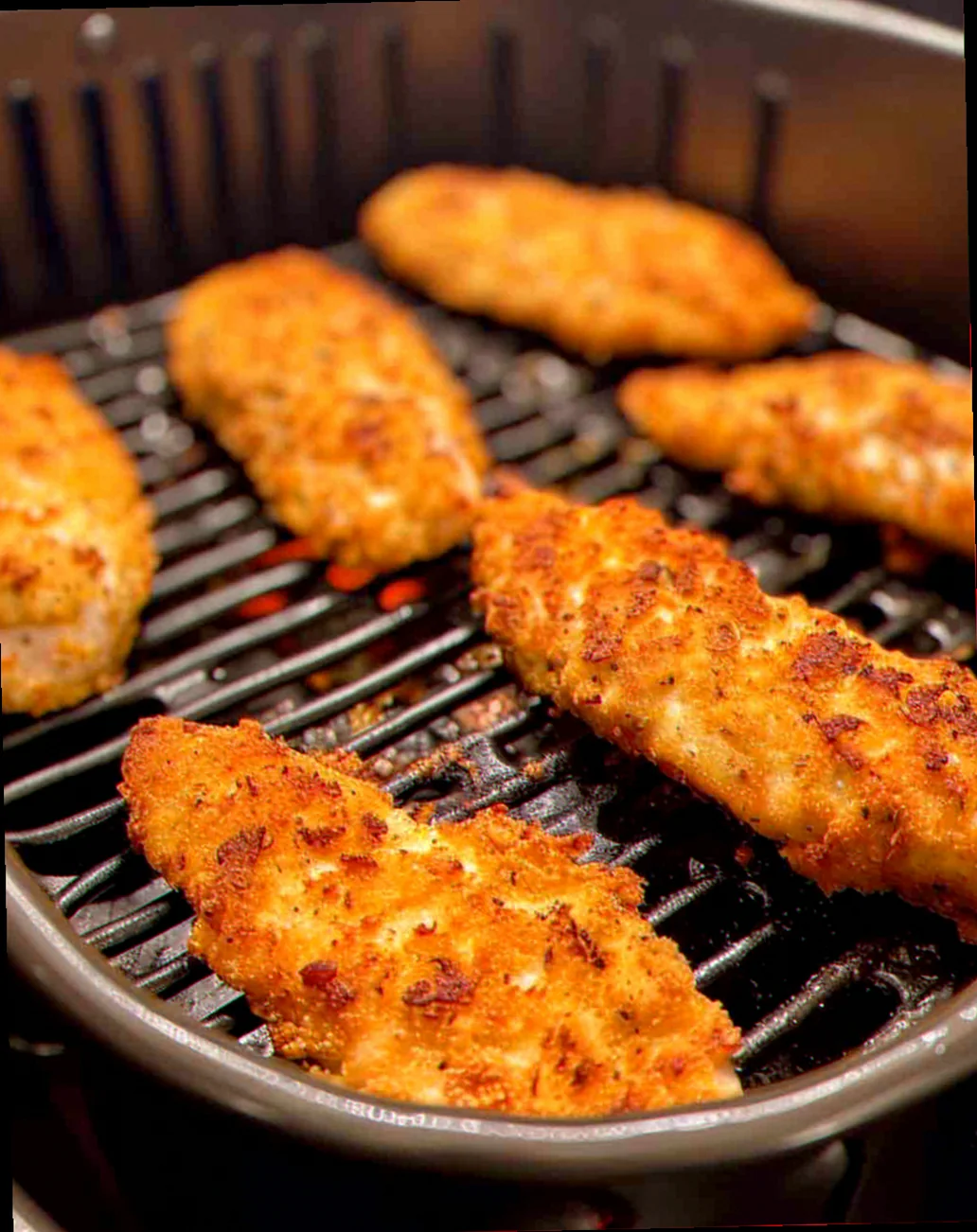
Did you know that in Australia, a single leftover chicken tender can spark a debate as fierce as a Test match? For many of us, that humble, breaded chicken strip isn't just a snack; it's a symbol of a Friday night footy feast, a kid's birthday party staple, or the desperate late-night saviour after a few too many at the local pub. But how we bring those golden nuggets back to life is where the real Aussie ingenuity, and sometimes, the utter confusion, kicks in.
The Basics: What Every Australian Should Know About Reheating Chicken Tenders
| What | The Australian reality |
|---|---|
| Plain English definition | Reheating chicken tenders means bringing cooked chicken tenders back to a safe and enjoyable eating temperature without compromising their texture or flavour. Think of it as giving them a second life, not a resurrection! |
| Who it affects most | This is a big one for families juggling busy schedules, students on a budget, tradies grabbing a quick bite, and anyone who's ever faced the "what's for dinner?" dilemma with a packet of cold tendies in the fridge. It's pretty much everyone from Cairns to Hobart. |
| The most surprising fact | Many Aussies instinctively reach for the microwave, believing it's the fastest way. However, this often results in rubbery, sad tenders. The surprising truth is that a crispier, tastier result can often be achieved with minimal extra effort, proving that sometimes, slower is better for our beloved chicken. |
| The number you need to know | To ensure food safety, chicken tenders should be reheated to an internal temperature of at least 74°C (165°F). This is crucial to kill any harmful bacteria that might have developed since the initial cooking. |
| The bottom line | Reheating chicken tenders correctly means aiming for that perfect balance: crispy coating, juicy chicken, and food safety. Don't settle for soggy disappointment! |
The Australian Story Behind Reheating Chicken Tenders
The story of chicken tenders in Australia is intrinsically linked to the rise of fast-casual dining and the growing acceptance of 'convenience foods' from the late 1980s onwards. While not as historically entrenched as a meat pie or a sausage roll, the humble chicken tender, often found in the frozen aisle of your local Woolies or Coles, or on the kids' menu at a suburban pub, quickly became a go-to. Think of the iconic KFC chicken tenders, or the ubiquitous offerings from Red Rooster. They became a symbol of easy, family-friendly meals, especially popular for busy parents like Sarah from Perth, who often relied on them for a quick weeknight dinner after soccer practice. A defining moment for many was the sheer convenience they offered during the infamous 'snowy' winters in the Snowy Mountains, or the sweltering heat of a Darwin summer - a guaranteed crowd-pleaser that required minimal prep. The 'great debate' over how best to reheat them often centres on nostalgic memories of perfectly crisp tendies from childhood birthday parties, sparking a nationwide quest for that elusive, golden crunch.
Real Australian Experiences
- Scenario 1: It's 8 pm on a Tuesday in Brisbane, and the kids have demolished last night's chicken tenders. Mum, a nurse at the Royal Brisbane Hospital, is exhausted but needs to feed them something quickly. She stares at the lukewarm tenders in the container, knowing a microwave is fast but often leads to rubbery disappointment. Does she risk the sogginess for speed, or try something else?
- Scenario 2: Dave, a FIFO worker from Kalgoorlie, has just landed back home after a stint on site. He's craving something familiar and easy. He pulls out a packet of frozen chicken tenders he bought at the local IGA, remembering how his nan used to make them. He wants them to taste as good as he remembers, not like something that's been nuked into oblivion.
- Regional variation: In the bustling cafes of Melbourne and Sydney, you might find chefs offering 'reheated' tenders as part of a gourmet salad, implying a specific, careful reheating method. Conversely, in rural Queensland or outback South Australia, it's more likely to be a 'chuck 'em in the oven' situation, where practicality often trumps perfection, and the aim is simply to get them hot enough.
- Generational difference: Younger Australians, raised on YouTube cooking tutorials and TikTok hacks, are more likely to experiment with air fryers and toaster ovens for optimal crispiness. Older generations, however, might stick to the tried-and-true oven method, or even the dreaded microwave, simply because 'that's how it's always been done'.
Myth-Busting: What Australians Get Wrong About Reheating Chicken Tenders
Myth 1: The microwave is the only fast way to reheat chicken tenders. Truth: While the microwave is undeniably the quickest option, it often sacrifices texture, leading to a chewy, damp coating. For a far superior result, especially for those in Adelaide or Hobart who appreciate a good crunch, a toaster oven or air fryer will achieve crispiness in just a few extra minutes, often around 5-8 minutes at 180°C (350°F), proving speed isn't always king.
Myth 2: Reheating chicken tenders means they'll never be as good as freshly cooked. Truth: This is a common misconception. With the right reheating method, particularly using dry heat like an oven or air fryer, chicken tenders can regain a significant amount of their original crispiness and juiciness. Think of it as a second chance at glory, not a lost cause.
Myth 3: Any temperature will do for reheating, as long as it's hot. Truth: The internal temperature is critical for food safety. Reheating chicken tenders to an insufficient temperature, say below 70°C (158°F), leaves them vulnerable to bacterial growth. Always aim for that 74°C (165°F) mark, which is easily checked with a meat thermometer - a tool that's becoming increasingly popular in Australian kitchens.
Recent Changes and What They Mean for Australians
The surge in popularity of air fryers across Australia in recent years has been a game-changer for reheating chicken tenders. What was once a niche appliance is now in millions of Aussie homes, from the Gold Coast to Geelong. This means that achieving that desirable crispiness is now more accessible and faster than ever before. Many Australians are discovering that their air fryer can revive leftover tendies to near-original glory in under 10 minutes. Furthermore, there's a growing awareness around food safety, with public health campaigns and readily available information online encouraging Australians to be more mindful of internal temperatures when reheating, especially for children's meals.
The Indigenous Australian Dimension
While chicken tenders themselves aren't traditionally an Indigenous Australian food, the concept of 'leftovers' and making the most of food resources is deeply ingrained in Aboriginal and Torres Strait Islander cultures. Many Indigenous families, like other Australians, face economic pressures and busy lifestyles, making efficient reheating of convenient foods a practical necessity. The sharing of food and ensuring everyone is fed is a core value, and this extends to ensuring that any available food, including reheated items, is prepared safely and respectfully for all family members, particularly elders and children.
Questions Australians Are Searching For
Is Reheat chicken tenders unique to Australia or is it a global phenomenon?
Reheating chicken tenders is absolutely a global phenomenon, driven by the widespread availability of pre-cooked and frozen chicken tenders in supermarkets and fast-food outlets worldwide. However, the way Australians approach it, the specific brands they favour (think Red Rooster vs. KFC vs. supermarket private labels), and the cultural context of it being a go-to family meal or a pub classic, does give it a distinctly Australian flavour. Our national obsession with achieving a 'crispy' texture, much like our love for a golden-brown sausage roll, is a key part of the Aussie experience.
Has anything changed recently in Australia regarding Reheat chicken tenders?
Yes, the most significant recent change is the widespread adoption of air fryers in Australian households. This has drastically altered how many people reheat their chicken tenders, moving away from less effective methods like the microwave or a standard oven towards a quicker, crispier result. There's also a growing emphasis on reducing food waste, which encourages people to find the best ways to revive leftovers like chicken tenders rather than discarding them.
What do most Australians still not understand about Reheat chicken tenders?
The most significant gap in understanding is the consistent belief that reheating automatically leads to a soggy, unappetising product. Many Australians still haven't fully embraced or understood the power of dry-heat methods like air fryers and toaster ovens for achieving near-original crispiness. Coupled with this is a sometimes-underestimated importance of internal food safety temperatures; while most know 'hot is good', the precise 74°C (165°F) target for chicken is often overlooked in favour of simply 'hot enough'.