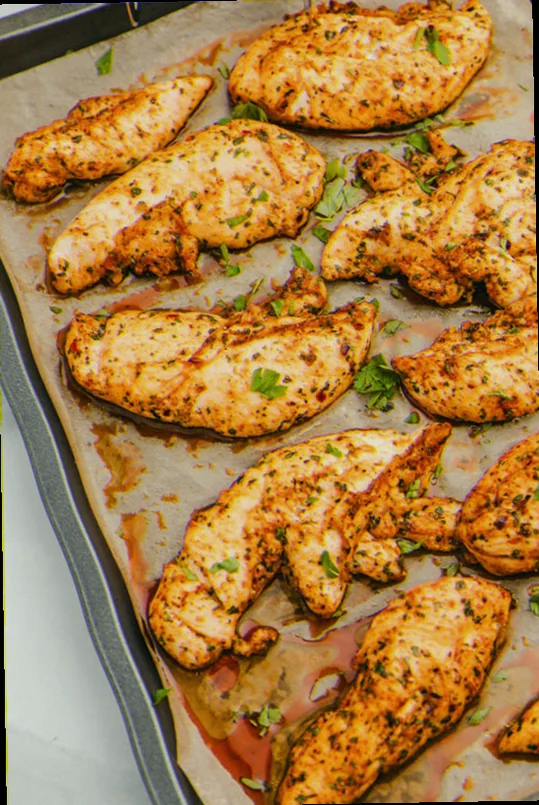
Baking chicken tenders in an Australian kitchen typically requires 15 to 20 minutes in a fan-forced oven preheated to 200°C. This timeframe ensures the poultry reaches a safe internal temperature of 75°C while maintaining moisture in the lean tenderloin muscle. Understanding these timings is critical for food safety and culinary quality across Australian households, where chicken remains the most consumed meat protein per capita.
Overview and Key Facts
| Attribute | Detail |
|---|---|
| What it is | The duration required to thermally process the pectoralis minor muscle of a chicken via dry heat. |
| Australian relevance | Standardised cooking protocols based on Celsius measurements and Australian fan-forced oven technology. |
| Key statistic | 75°C is the minimum internal temperature required by Australian food safety standards. |
| Governing body / regulation | Food Standards Australia New Zealand (FSANZ) and the Australian Chicken Meat Federation (ACMF). |
| Best known for | Providing a lean, high-protein meal component that is faster to cook than a full chicken breast. |
How It Works / What to Know
The chicken tender, or tenderloin, is a specific strip of meat attached to the underside of each breast. Because this muscle is rarely exercised by the bird, it is exceptionally tender but also very lean, meaning it can dry out quickly if overcooked. In Australia, the "standard" oven is almost always fan-forced, which uses a circular element and a fan to distribute heat more evenly than the conventional radiant ovens often found in North America. This means that Australian recipes often require a temperature adjustment; if a recipe calls for 200°C, a conventional oven would need to be set to 220°C.
The process of baking involves the Maillard reaction, where proteins and sugars on the surface of the meat react under heat to create a browned, savoury crust. A fact that surprises most Australian home cooks is that chicken tenderloins contain a small, white tendon. While edible, this tendon can contract during the 15-20 minute baking window, causing the tender to curl. Removing this tendon or "scoring" it before baking ensures the meat remains flat, allowing for even heat distribution and a more consistent cooking time across the entire tray.
Australian Context and Regional Differences
- National picture: According to the Australian Chicken Meat Federation, the average Australian consumes approximately 47 kilograms of chicken meat per year. This high demand ensures that fresh, RSPCA Approved chicken tenders are available in almost every supermarket from Hobart to Darwin.
- State / territory differences: While the physics of baking remains constant, the "cold chain" logistics vary. In Western Australia and South Australia, local producers like Mt Barker or Inghams dominate the local market, ensuring that tenders often reach the oven within 48 hours of processing, which preserves the moisture content and can slightly reduce the necessary cooking time compared to older stock.
- Urban vs regional: In rural Australia, where gas-powered ovens are more common in off-grid or older farmhouse properties, cooks must account for "hot spots." Unlike the consistent airflow of a Sydney apartment's electric fan-forced oven, a gas oven in regional Victoria may require rotating the baking tray halfway through the 20-minute timer to prevent uneven browning.
- Indigenous Australian perspective: There is a growing trend of incorporating native botanicals into the baking process. Rubbing tenders with lemon myrtle or mountain pepperberry before baking not only adds a distinct Australian flavour profile but the antioxidants in these plants can slightly alter the surface browning rate.
- Seasonal or climate factor: In the humid climates of Queensland and the Northern Territory, ambient moisture can interfere with the crisping of crumbed chicken tenders. In these regions, it is often recommended to use a wire rack over the baking tray to allow air to circulate underneath, ensuring the bottom of the tender does not become "soggy" during the 20-minute bake.
Practical Guide for Australians
To achieve the perfect bake, start by preheating your oven. In Australia, the 200°C (fan-forced) setting is the "golden rule" for poultry. Use a heavy-gauge baking tray lined with Australian-made baking paper (such as Glad or Multix) to prevent sticking. If you are baking "naked" tenders (unmarinated and uncrumbed), 15 minutes is usually sufficient. For breaded or "schnitzel-style" tenders, 20 minutes provides the necessary time for the coating to crisp up.
Australians should utilise a digital meat thermometer, available at retailers like Bunnings or Kitchen Warehouse, to verify the internal temperature. Insert the probe into the thickest part of the largest tender; once it hits 74°C, remove the tray from the oven. The "carry-over" cooking effect will bring the temperature to the required 75°C while the meat rests. This resting period of 3 to 5 minutes is vital-it allows the muscle fibres to relax and reabsorb juices, preventing the dry texture often associated with overbaked poultry.
Costs, Access, and Availability in Australia
Chicken tenders are widely accessible across Australia. At major retailers like Woolworths and Coles, fresh chicken tenderloins typically cost between $18.00 and $22.00 per kilogram, depending on whether they carry the "Organic" or "Free Range" certification. Pre-marinated or pre-crumbed versions are also available in the freezer section, though these often contain additives that may slightly extend the baking time by 2-3 minutes due to the moisture content of the coatings.
For those in remote communities, the "Community Stores" system often stocks frozen tenders. When baking from frozen, Australians must add approximately 10 minutes to the standard time, totalling 25 to 30 minutes at 200°C. It is important to note that the Australian Poultry Industry ensures that no hormones have been used in chicken production since the 1960s, a fact often overseen by consumers concerned about meat quality and cooking outcomes.
Common Mistakes and Misconceptions
- Misconception 1: Many believe that "pink" meat near the centre always means the chicken is raw. In reality, young Australian chickens can have more porous bones, allowing marrow to seep into the meat, causing a slight pinkish hue even when the safe 75°C threshold has been reached.
- Misconception 2: Using "High Heat" (240°C) will cook the tenders faster and better. While it cooks the outside faster, it often leaves the centre underdone or results in a rubbery texture due to the rapid protein coagulation.
- Pitfall to avoid: Overcrowding the tray is a common mistake in Australian kitchens. If the tenders are touching, they will steam rather than bake, resulting in a pale, unappealing finish. Ensure at least 2cm of space between each piece to allow the fan-forced air to do its job.
Frequently Asked Questions
Is How long bake chicken tenders available / relevant across all of Australia?
Yes. The physics of baking chicken tenders and the food safety guidelines (75°C internal temp) provided by FSANZ are applicable in every state and territory, from the cool climate of Tasmania to the tropical heat of the Kimberley. The only variable is the type of oven (gas vs. electric) commonly found in different housing stocks.
What do Australians need to know before getting started with How long bake chicken tenders?
Always check if your oven is fan-forced. Most modern Australian ovens are, but if yours is an older conventional model, you must increase the temperature by 20°C or increase the baking time by about 5 minutes. Additionally, ensure your chicken is sourced from a supplier that adheres to the Australian Industry Welfare Standards.
How does How long bake chicken tenders in Australia compare to other countries?
The primary difference is the measurement system and oven technology. While Americans use Fahrenheit and often rely on conventional heat, Australians use Celsius and fan-forced technology. This makes Australian baking generally faster and more efficient, but it requires closer monitoring to prevent the lean tenderloin from drying out in the high-velocity hot air.