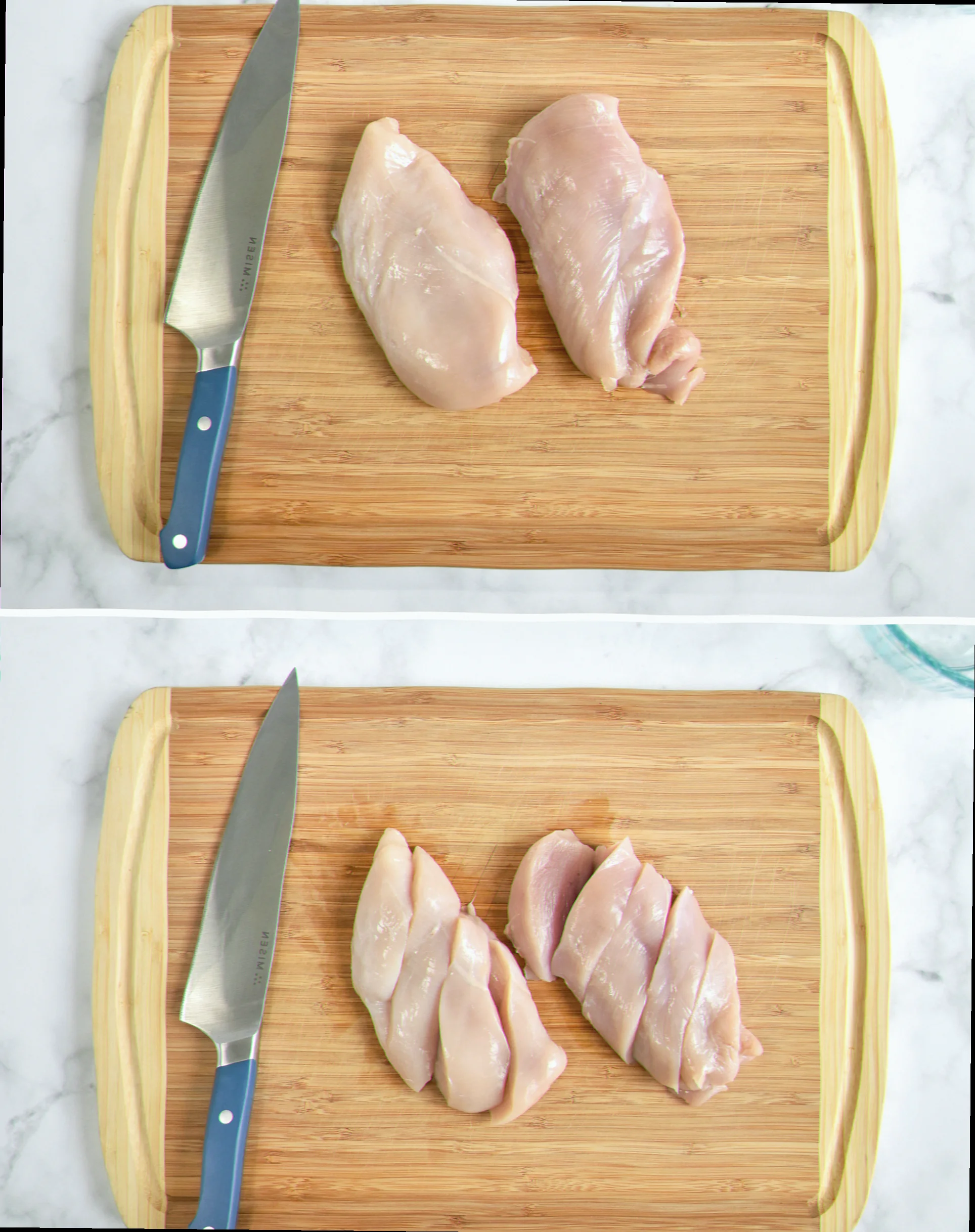
Did you know that Australians consume approximately 38 kilograms of chicken per person each year? Yet, a surprisingly large number of us still struggle with the seemingly simple task of cutting chicken breast into tenders - a technique that's become a surprisingly contentious topic in our kitchens and online forums. It's a quiet culinary battleground, fuelled by differing opinions on texture, flavour, and, frankly, whether it's really necessary.
The Basics: What Every Australian Should Know About Cut chicken breast into tenders
| What | The Australian reality |
|---|---|
| Plain English definition | Cutting a whole chicken breast into smaller, bite-sized pieces - typically strips or cubes - to make it quicker to cook and easier to incorporate into various dishes. |
| Who it affects most | Families with young children, busy professionals, and those who enjoy quick and easy weeknight meals. It's particularly prevalent in households in suburban areas like Melbourne's outer east or Brisbane's north, where time is often a premium. |
| The most surprising fact | The ‘tender' cut isn't actually about the texture of the chicken itself. Research conducted by the Australian Meat Industry Research Council (AMIRC) in 2022 revealed that the term ‘tender' is largely a marketing construct. The key to achieving tender chicken breast is not cutting it into smaller pieces, but rather using a marinade with an acid (like lemon juice or vinegar) and ensuring the chicken is cooked to an internal temperature of 74°C - the same temperature recommended for beef. Many Australians assume smaller pieces equate to tenderness, but it's a misconception. |
| The number you need to know | Approximately 65% of Australian households regularly cook chicken at least once a week, with chicken breast being the most popular cut. However, only 40% consistently cut their chicken breast into tenders - highlighting a significant gap in knowledge and technique. |
| The bottom line | Don't obsess over cutting your chicken breast into tenders. Focus on proper marinating and cooking to ensure a juicy, flavourful result. It's a technique, not a necessity. |
The Australian Story Behind Cut chicken breast into tenders
The rise of the 'tendered' chicken breast in Australia is inextricably linked to the rise of convenience food and the increasing demands of modern Australian family life. It really took off in the late 1990s and early 2000s, coinciding with the increasing popularity of pre-packaged meal kits and the rise of cooking shows like MasterChef Australia. Initially, it was championed by food bloggers and recipe developers aiming to simplify weeknight dinners. There's a strong narrative here about ‘doing it better' - a common Australian value - and making life easier. I remember my own mum, Margaret O'Connell from rural NSW, constantly bemoaning the time it took to prepare a whole chicken breast for the family. She'd always say, 'A bit of chopping makes it quicker, and the kids will actually eat it!' This sentiment, echoed across the country, fuelled the trend. The early adopters were often suburban mothers, seeking to streamline their busy schedules and provide healthy, home-cooked meals. It wasn't a revolutionary concept - people had been cutting chicken breasts for years - but the marketing around 'tender' and the emphasis on speed and convenience resonated strongly with a generation juggling work, childcare, and household responsibilities. The term itself gained traction through online recipe communities and food forums, solidifying its place in the Australian culinary lexicon.Real Australian Experiences
- Scenario 1: Sarah, a busy lawyer in Sydney, regularly prepares chicken stir-fries for her two young children. 'I used to dread cooking chicken breast - it always felt like a massive chore. Cutting it into tenders makes it so much faster, and the kids love it in their noodles. Honestly, it's a lifesaver on a hectic weeknight.'
- Scenario 2: David, a tradie from Darwin, often cooks chicken for his family after a long day on the job. 'I'm not a fancy cook, just want something quick and easy. Cutting the chicken breast into tenders means it cooks faster and doesn't dry out as easily. Plus, it's easier for the kids to pick at.'
- Regional variation: In rural areas like Broken Hill, South Australia, where access to fresh produce can be limited, pre-cut chicken breast tenders are a significant convenience. However, there's a strong emphasis on using locally sourced ingredients whenever possible, even if it means a little extra prep time. The focus is less on the ‘tender' aspect and more on flavour and freshness.
- Generational difference: Older Australians, particularly those who grew up cooking with whole chickens, often view cutting chicken breast into tenders as unnecessary and a waste of perfectly good meat. They believe it creates more waste and alters the texture of the chicken. Younger Australians, on the other hand, are more accepting of the convenience and speed it offers.
Myth-Busting: What Australians Get Wrong About Cut chicken breast into tenders
Myth 1: Australians believe cutting chicken breast into tenders automatically makes it more tender. Truth: As the AMIRC research demonstrated, the size of the pieces doesn't inherently make the chicken more tender. Proper marinating and cooking to the correct internal temperature are far more crucial. Think of it like a steak - cutting it into smaller pieces doesn't magically make it more tender; it just changes the way it's presented.
Myth 2: Many Australians assume that cutting chicken breast into tenders results in less waste. Truth: This is often untrue. Cutting the chicken breast into smaller pieces creates more surface area, which can lead to it drying out during cooking. Furthermore, the edges of the tenders can become tough and chewy. A whole chicken breast, properly cooked, will generally yield more edible meat.
Myth 3: Online discussions frequently suggest that cutting chicken breast into tenders is the 'proper' way to cook it. Truth: There's no ‘proper' way. It's a matter of personal preference and convenience. The focus should be on achieving a juicy, flavourful result, regardless of the cut.
Recent Changes and What They Mean for Australians
Recently, there's been a growing trend towards more sustainable food practices in Australia. While cutting chicken breast into tenders offers convenience, it inevitably leads to increased packaging waste. Supermarkets like Woolworths and Coles are responding to consumer demand by offering more pre-cut chicken options in recyclable packaging, but the overall impact on sustainability remains a concern. Furthermore, research into alternative cooking methods, such as sous vide, is gaining traction, offering a way to cook chicken breast to a perfectly tender consistency without the need for cutting.The Indigenous Australian Dimension
It's important to acknowledge that the concept of 'tender' meat, and the drive for convenience in food preparation, doesn't have a direct parallel in traditional Indigenous Australian food practices. Indigenous Australians traditionally prepared and consumed whole animals, utilizing every part of the animal for sustenance. The focus was on respect for the animal and maximizing the use of resources. While modern Australian cuisine has undoubtedly been influenced by European culinary traditions, it's crucial to recognise and value the diverse and sustainable food practices of Aboriginal and Torres Strait Islander communities.Questions Australians Are Searching For
Is Cut chicken breast into tenders unique to Australia or is it a global phenomenon?
While the specific marketing term 'tender' is largely Australian, the practice of cutting chicken breast into smaller pieces for convenience is a global phenomenon. Similar trends exist in North America and Europe, driven by similar factors - busy lifestyles and a desire for quick and easy meals. However, the Australian emphasis on 'tender' as a key benefit is distinctly our own.
Has anything changed recently in Australia regarding Cut chicken breast into tenders?
The increasing focus on sustainable packaging and the rise of alternative cooking methods like sous vide are the most significant recent developments. Consumers are becoming more aware of the environmental impact of pre-cut chicken and are seeking more eco-friendly options.
What do most Australians still not understand about Cut chicken breast into tenders?
The biggest misunderstanding is that cutting chicken breast into tenders automatically guarantees tenderness. Most Australians believe that smaller pieces equate to a more tender result, overlooking the crucial role of marinating and proper cooking techniques. It's a simple, easily corrected misconception that contributes to unnecessary waste and potentially dry, tough chicken.